

In a study of pediatric patients 7 years of age and older with IBS-C,
LINZESS demonstrated improvement in abdominal pain and bowel movement frequency over 12 weeks1
LINZESS 145 mcg was studied in a 12-week, double-blind, parallel-group, randomized, multicenter clinical trial of pediatric patients 7 years of age and older with IBS-C.
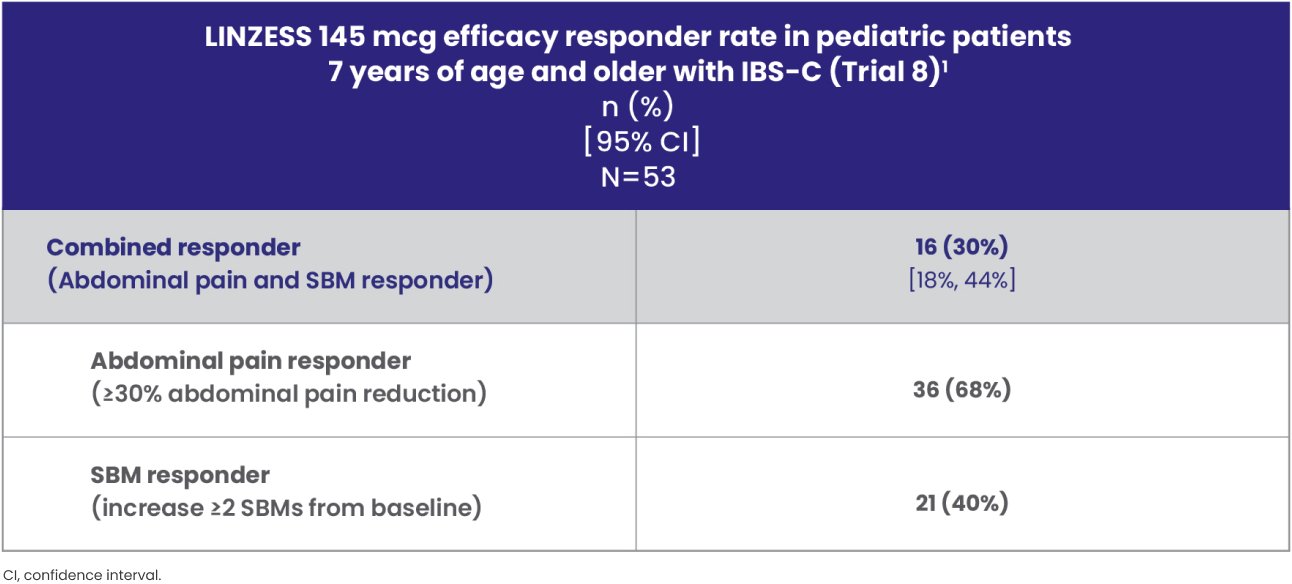
The primary endpoint was the proportion of patients who achieved at least a 30% reduction in abdominal pain and an increase of at least 2 spontaneous bowel movements (SBMs)/week from baseline for at least 6 out of 12 weeks (combined responder).
Abdominal pain and SBM frequency improved during week 1
and improvement was maintained throughout the remainder of the 12-week treatment period1
LINZESS 145 mcg was studied in a 12-week, double-blind, parallel-group, randomized, multicenter clinical trial (N=53) of pediatric patients 7 to 17 years of age with IBS-C. The primary endpoint was the proportion of patients who achieved at least a 30% reduction in abdominal pain and an increase of at least 2 spontaneous bowel movements (SBMs)/week from baseline for at least 6 out of 12 weeks (combined responder).
Patient characteristics
- Mean age: 13 years
- Gender: 57% female
- Race/ethnicity: 34% identified as Hispanic or Latino, 72% identified as White, 25% identified as Black or African American, and 4% identified as Asian
- All patients met Rome III criteria for child/adolescent IBS-C, requiring that, for at least once per week for ≥2 months before the screening visit, the participant experienced abdominal discomfort (an uncomfortable sensation not described as pain) or pain associated with 2 or more of the following at least 25% of the time:
- Improvement with defecation
- Onset associated with a change in frequency of stool
- Onset associated with a change in form (appearance) of stool
- Pediatric patients were required to have an average daytime abdominal pain score of ≥1 (on a 0-4 scale) and had an average of fewer than 3 spontaneous bowel movements (SBMs) per week during the 14 days before randomization